The Invisible Architecture of Choice
When a guest steps into a hotel lobby or browses a booking page, their conscious mind thinks it’s looking for “price” and location.” But their subconscious is absorbing thousands of micro-signals that dictate whether they feel stressed, welcomed, or compelled to pull out their credit card. This is the domain of Neuromarketing in Hospitality.
Neuromarketing combines neuroscience, psychology, and marketing to understand how consumers actually make decisions, bypassing the often unreliable answers they give in surveys. In the hotel industry, where you aren’t just selling a bed, but an experience, optimizing for the brain’s deepest hardwiring is the ultimate competitive advantage.
The Power of Scent and Sound (Sensory Branding)
Our sense of smell is the only sense that bypasses the thalamus and goes straight to the amygdala and hippocampus—the brain’s emotional and memory centers.
Luxury hotels have long used custom ambient scents:
- Citrus and Green Tea for energy and cleanliness (often used in morning lobbies or fitness centers).
- Lavender and Vanilla to lower heart rates, reducing the stress of travel upon check-in.
- Leather and Cedar to evoke heritage and exclusivity in executive lounges.
Combined with psychoacoustics—background music engineered at specific tempos (around 60 BPM) to slow down breathing—hotels create a “threshold experience.” The moment you walk in, your brain is biochemically signaled to relax.
Visual Friction and the “Paradox of Choice” on Booking Engines
If sensory branding rules the physical space, cognitive ease rules the digital space. The brain is an energy-conserving organ. When a hotel website offers 15 different room types, 4 breakfast packages, and 6 cancellation policies on a single page, it triggers “choice overload” (the Paradox of Choice).
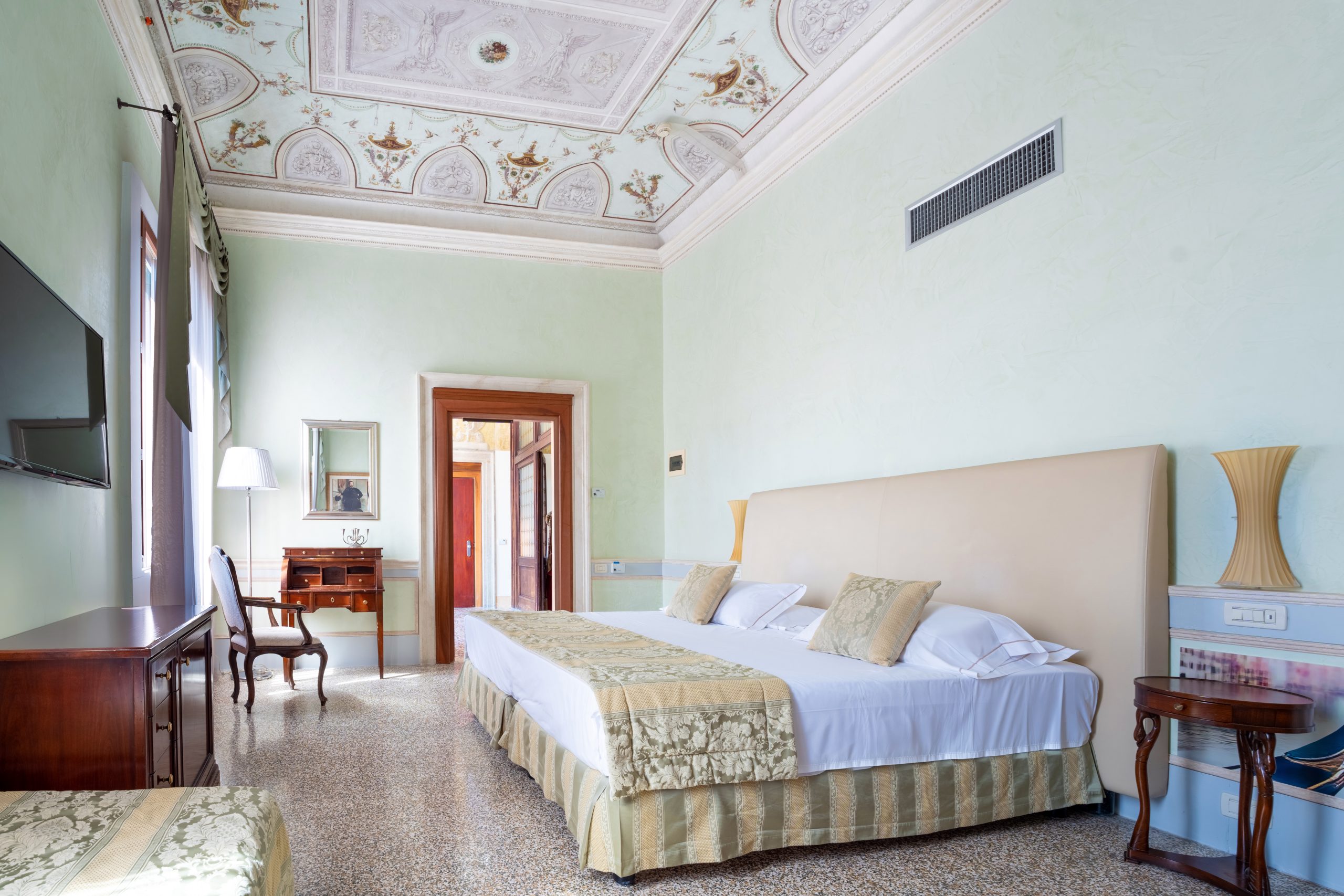
Hotel neuromarketing_lobby
Neuromarketing principles suggest simplifying the funnel:
- The Decoy Effect: Introduce a slightly inferior “decoy” room rate to make the target rate look like an undeniable bargain.
- Scarcity and Social Proof: “Only 2 rooms left” or “15 people are looking at this hotel right now.” These tap into our evolutionary fear of missing out (FOMO) and reliance on the “herd” for safety decisions.
- Frictional Reductions: Using high-contrast CTA (Call to Action) buttons and minimizing required form fields reduces cognitive load, increasing conversion rates.
Biophilia: The Evolutionary Need for Nature
Humans spent 99% of their evolutionary history outdoors. Biophilic design—integrating natural elements like living walls, water features, and organic curves—literally lowers cortisol levels. When a hotel room features natural wood grain or views of greenery, the brain registers the environment as “safe” and “resource-rich,” increasing the perceived value of the room and the overall satisfaction of the stay.
Conclusion
Neuromarketing isn’t about manipulation; it’s about alignment. By understanding what the brain inherently seeks—safety, cognitive ease, status, and sensory pleasure—hoteliers can design digital and physical experiences that don’t just secure a booking, but forge a deep, emotional loyalty.