Category: experiences

Venezia vera, senza filtri. Stanco delle trappole per turisti? Questa è la tua porta d’accesso alla Venezia autentica, quella che i veneziani custodiscono gelosamente. Svela segreti nascosti, vivi esperienze uniche, create da chi Venezia la vive ogni giorno. Assapora l’essenza vera della città lagunare. La tua Venezia, come non l’hai mai immaginata, inizia qui.

Authentic Venice, Unfiltered. Tired of tourist traps? This is your gateway to the real Venice, the one Venetians jealously guard. Unlock hidden secrets, live unique experiences, crafted by those who live and breathe Venice every day. Savor the true essence of the lagoon city. Your Venice, as you’ve never imagined it, starts here.

  • Neuromarketing in Hospitality: How the Brain Books a Room

    Neuromarketing in Hospitality: How the Brain Books a Room

    The Invisible Architecture of Choice

    When a guest steps into a hotel lobby or browses a booking page, their conscious mind thinks it’s looking for “price” and location.” But their subconscious is absorbing thousands of micro-signals that dictate whether they feel stressed, welcomed, or compelled to pull out their credit card. This is the domain of Neuromarketing in Hospitality.

    Neuromarketing combines neuroscience, psychology, and marketing to understand how consumers actually make decisions, bypassing the often unreliable answers they give in surveys. In the hotel industry, where you aren’t just selling a bed, but an experience, optimizing for the brain’s deepest hardwiring is the ultimate competitive advantage.

    The Power of Scent and Sound (Sensory Branding)

    Our sense of smell is the only sense that bypasses the thalamus and goes straight to the amygdala and hippocampus—the brain’s emotional and memory centers.

    Luxury hotels have long used custom ambient scents:

    • Citrus and Green Tea for energy and cleanliness (often used in morning lobbies or fitness centers).
    • Lavender and Vanilla to lower heart rates, reducing the stress of travel upon check-in.
    • Leather and Cedar to evoke heritage and exclusivity in executive lounges.

    Combined with psychoacoustics—background music engineered at specific tempos (around 60 BPM) to slow down breathing—hotels create a “threshold experience.” The moment you walk in, your brain is biochemically signaled to relax.

    Visual Friction and the “Paradox of Choice” on Booking Engines

    If sensory branding rules the physical space, cognitive ease rules the digital space. The brain is an energy-conserving organ. When a hotel website offers 15 different room types, 4 breakfast packages, and 6 cancellation policies on a single page, it triggers “choice overload” (the Paradox of Choice).

    Hotel neuromarketing_lobby

    Neuromarketing principles suggest simplifying the funnel:

    1. The Decoy Effect: Introduce a slightly inferior “decoy” room rate to make the target rate look like an undeniable bargain.
    2. Scarcity and Social Proof: “Only 2 rooms left” or “15 people are looking at this hotel right now.” These tap into our evolutionary fear of missing out (FOMO) and reliance on the “herd” for safety decisions.
    3. Frictional Reductions: Using high-contrast CTA (Call to Action) buttons and minimizing required form fields reduces cognitive load, increasing conversion rates.

    Biophilia: The Evolutionary Need for Nature

    Humans spent 99% of their evolutionary history outdoors. Biophilic design—integrating natural elements like living walls, water features, and organic curves—literally lowers cortisol levels. When a hotel room features natural wood grain or views of greenery, the brain registers the environment as “safe” and “resource-rich,” increasing the perceived value of the room and the overall satisfaction of the stay.

    Conclusion

    Neuromarketing isn’t about manipulation; it’s about alignment. By understanding what the brain inherently seeks—safety, cognitive ease, status, and sensory pleasure—hoteliers can design digital and physical experiences that don’t just secure a booking, but forge a deep, emotional loyalty.

  • Descend to the profound heart of Venice through a stone spiral that soars towards the sky.

    Descend to the profound heart of Venice through a stone spiral that soars towards the sky.

    You don’t have to climb Venice to understand it, but descend it. In Venice, the
    “Scala Contarini del Bovolo” is a spiral that rises towards the sky to lead
    you down into the secret heart of the city, where the real Venice is not admired, but
    listened to.

    The narrative of the “hidden gem” no longer convinces us.

    In the era of digital saturation and hyper-tourism,
    the concept of truly “hidden” places is almost mythical. False.

    I wonder then if the relative “elusive” aura of the Scala del Bovolo is accidental.
    I propose instead that it is a form of intentional discretion. Venice,
    historically and still today, is a city of secrets, of subtly revealed beauty
    and layered experiences. The Scala is not “hidden” in the sense of being almost
    “inferior,” but rather intricately connected to the urban fabric. Finding it
    requires a deliberate act of research and discovery.

    This discretion adds charm, offering a more authentic and less commodified
    experience compared to the great iconic attractions advertised on social media.

    Venice. Faded postcard for hurried tourists? Or a vibrant, layered, pulsating
    soul beneath the sparkling surface of the most famous canals? The answer, then,
    whispered among the less traveled streets, is complex, elusive, authentic. And it
    materializes, unexpectedly, in a corner of sky captured in the stone spiral: the
    “Scala Contarini del Bovolo”.

    Not a simple monument, not a mere attraction. The Scala Bovolo is a key. A key
    to decipher the enigma of Venice, to penetrate its pulsating heart, to understand its
    intimate essence.

    It is a conceptualization of ascent, an architectural manifesto carved in Istrian
    stone, that speaks to us of ambition, perspective, and a Venice that resists time
    and trivialization. A clear example of that authentic, silent greatness that is
    revealed to those who know how to look beyond the surface.

    The Ascent as a Venetian Metaphor: From the Lagoon Level to the Open Sky

    Venice, a horizontal city. Spread out on the water, enveloped in its liquid embrace,
    it seems to deny verticality. Its foundations sink into the mud, its expansion
    unfolds laterally, in a labyrinth of streets and squares.

    Yet, in the heart of this apparently flat city, beats an irrepressible desire for
    elevation.

    A yearning for height that manifests itself in the Gothic spires, the soaring
    bell towers, the domes that defy gravity. St. Mark’s, with its Byzantine basilica
    and its bell tower pointing to the sky, is the most striking example of this
    vertical tension.

    But the Scala Bovolo, more intimate, more discreet, embodies this
    aspiration in an even more subtle, more human way.

    Its spiral is an upward movement that breaks the horizontal linearity of Venice. It
    is an invitation to rise, to detach from sea level, to seek a privileged point of
    view
    . Not only physical, but also metaphorical. Ascent becomes a symbol of
    ambition, intellectual elevation, spiritual search.

    A path that leads from the ground to the sky, from the concrete to the abstract, from
    the particular to the universal.

    But is it just a staircase, after all?

    A mere functional architectural element? Or does it contain a deeper meaning, an echo
    of the Venetian soul that aspires to infinity?
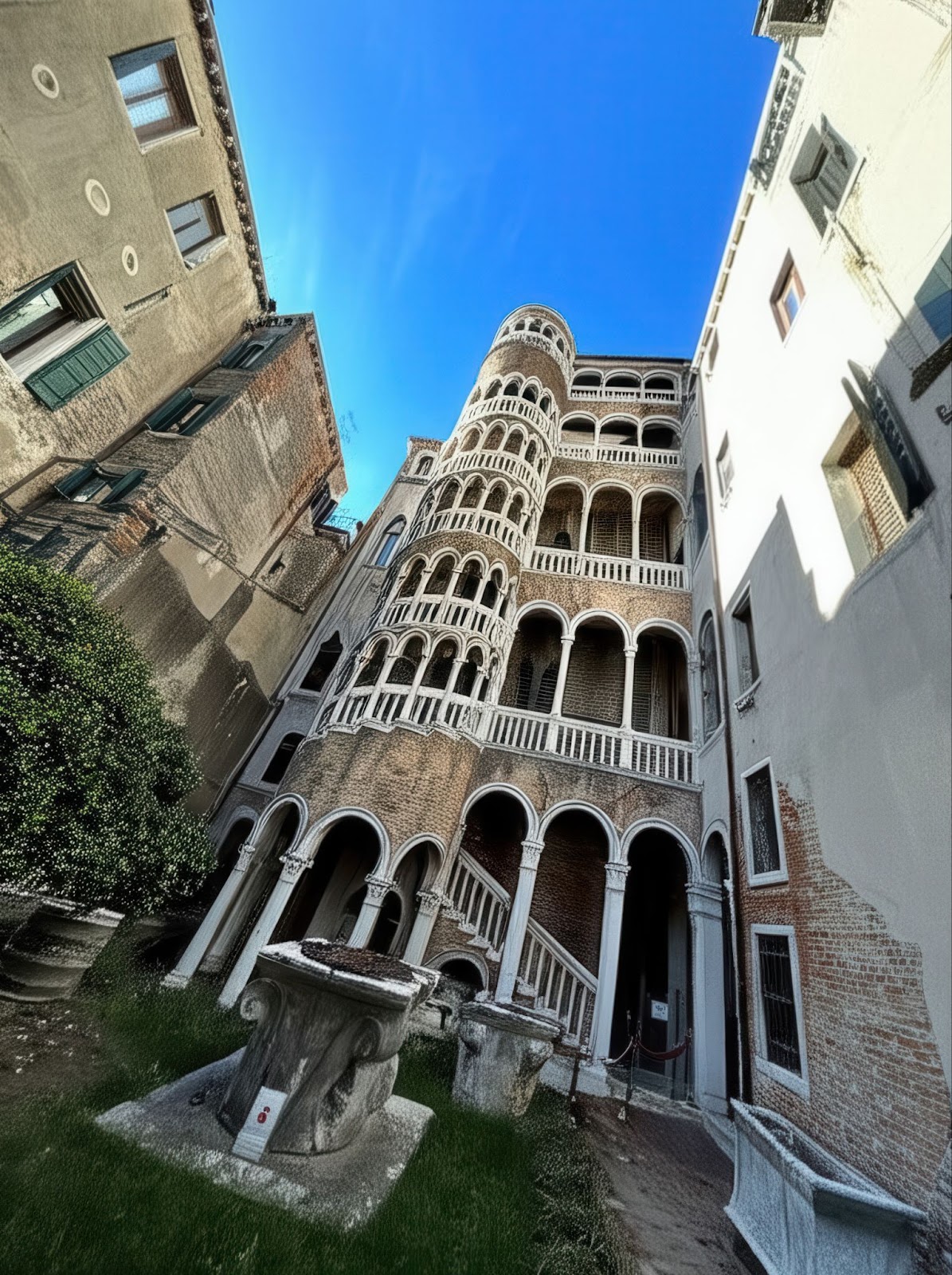
    Scala Contarini Bovolo: stone spiral in the secret heart of Venice.

    Bòvolo: The Snail of Time – Organic Growth and Venetian Patience

    Bovolo“. A dialect term, sweet and round like the shape it designates. Snail,
    spiral, shell. But why call a staircase that?

    It is not just a descriptive matter, a simple formal analogy. “Bovolo” is a word
    laden with latent meanings, which resonate deeply with the essence of Venice.

    The snail is a symbol of slow, organic, patient growth. A constant, but gradual
    movement that develops over time. And Venice, is it not also the result of a
    slow and patient growth?

    Built brick by brick, foundation upon foundation, over the centuries, snatching space
    from the lagoon, adapting to its changing conditions.

    The Bovolo spiral recalls cyclic time, continuous movement, the
    interconnection of levels. Just as the snail builds its shell gradually, so
    Venice has built itself over time, layering history and culture. An
    organic process, non-linear, that reflects the complexity and
    richness of the city.

    In a frenetic world, dominated by speed and immediacy, Venice and its Scala Bovolo
    remind us of the value of slowness, patience, organic growth.

    They resist haste, superficiality, standardization. Like the snail that retreats
    into its shell to protect itself, Venice preserves its identity, its authenticity,
    its deep soul.

    But how does this stone snail, silent and discreet, contain the spirit of Venice?
    What is the secret kept in its spiral?

    Architecture of Ascent: Fusion of Styles, Synthesis of Venetian Identity

    The Scala Bovolo is not a monolithic, unequivocal architectural work. It is a
    palimpsest of styles, a dialogue between different eras, a symphony of influences.
    Renaissance, Gothic, Venetian-Byzantine.

    A fusion that is not accidental, not a mere decorative eclecticism. It is a
    language. The architectural language of Venice.

    The Gothic, slender and light, recalls verticality, the aspiration to the sky.
    The Renaissance, harmonious and proportioned, celebrates man and his
    centrality. The Venetian-Byzantine influence, rich in decorations and oriental
    suggestions, recalls Venice’s mercantile and cosmopolitan past, its role as a
    bridge between East and West.

    This fusion of styles is not just an aesthetic matter. It is a metaphor for the same
    Venetian identity, complex, layered, multicultural. Venice has been a
    crossroads of peoples, ideas, goods. It has assimilated, reinterpreted, synthesized
    different influences, creating something unique, unrepeatable.

    The Scala del Bovolo, in this sense, is a microcosm of Venetian architecture.
    A compendium of styles that merge into a single work, creating a surprising harmony.
    Not a simple juxtaposition, but a true synthesis. Like Venice itself, which has
    transformed diversity into wealth, complexity into beauty.

    And does this architectural ascent, this layering of styles, perhaps also reflect a
    social, cultural ascent? A path of evolution and transformation that has shaped the
    soul of Venice?

    Ascent to Perspective: The View from the Bovolo, Panoramic Understanding of Venice

    Climbing the Scala Bovolo is not just a physical exercise, a simple climb. It is a
    journey. A path that winds in a spiral, gradually leading upwards, towards a
    new perspective. And once you reach the top, the reward is immense: a breathtaking
    panoramic view of Venice.

    Not the postcard Venice, the one of the crowded grand canals and iconic monuments.
    But a more intimate, more secret, more authentic Venice.

    From the top of the Bovolo, you can embrace the urban fabric with a gaze, the
    intricate pattern of streets and squares, the red roofs that stretch as far as the
    eye can see, the domes that emerge like islands in the sea of tiles.

    An unprecedented perspective, which reveals the complexity and harmony of the
    Venetian urban fabric. One perceives its organic nature, its spontaneous growth, its
    adaptation to the lagoon context. One understands its proportions, its distances, its
    spatial relationships. An open-air urban planning lesson.

    But the view from the Bovolo is not just a pleasure for the eyes, an aesthetic
    satisfaction. It is also an intellectual, emotional experience. Physical
    ascent transforms into intellectual ascent, into emotional elevation. One gains a new
    perspective not only on Venice, but also on oneself, on one’s place in the world.

    Can a staircase really offer a new way of seeing?

    Can it transform our perception, broaden our horizons, enrich our understanding?

    The answer, whispered by the wind that caresses the top of the Bovolo, is an
    unequivocal yes.
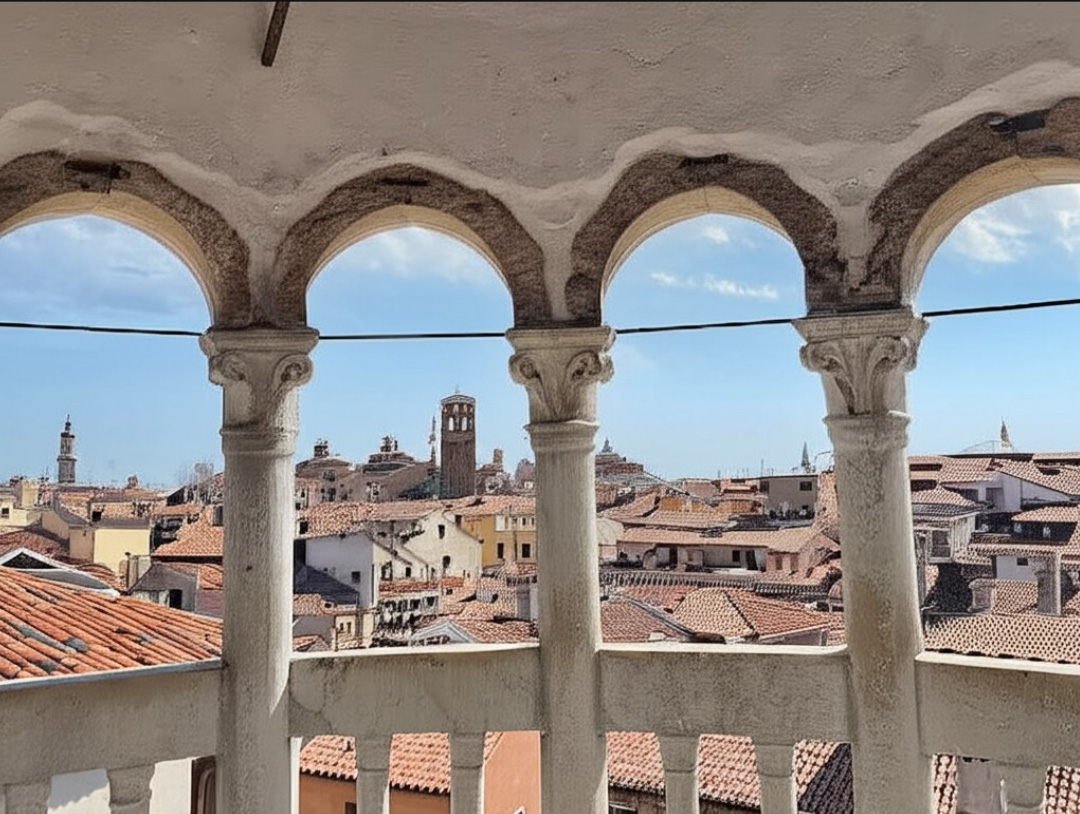
    Scala Contarini Bovolo: stone spiral in the secret heart of Venice.

    Authentic Venice in Detail: Beyond the Grand Canal, the Intimate Greatness of the
    Bovolo

    Venice, often reduced to a tourist icon, a picturesque backdrop for selfies and
    souvenirs. The Grand Canal, Piazza San Marco, the Rialto Bridge. Magnificent places,
    of course, but often overcrowded, distorted by the crowds and consumerism. Where to
    find, then, the
    authentic Venice?

    Not in the most obvious, most celebrated places. But in the details, in the
    particulars, in the hidden corners, in the less traveled streets. The Scala del
    Bovolo is one of these places. Discreet, secluded, almost shy, it is hidden in a
    secluded square, away from the clamor of the masses.

    Yet, its beauty is extraordinary, its elegance refined, its atmosphere evocative. An
    intimate greatness, which is revealed to those who have the patience to seek it, to
    discover it, to appreciate it. Not the ostentatious grandeur of the palaces on the
    Grand Canal, but a greatness more silent, more interior, more authentic.

    The Scala Bovolo is an example of this hidden Venice, of this discreet beauty,
    of this resistant authenticity. It reminds us that the true essence of Venice is not
    found in tourist clichés, but in its deep soul, in its millennial history, in its
    unique culture.

    Its image was immortalized in the famous perspective map of Venice created by
    Jacopo de Barbari in 1500 and appeared in the film “Othello” by
    Orson Welles in 1952. Its presence both in a historical map and in an
    internationally renowned film highlights the enduring visual appeal of the Scala
    Contarini del Bovolo and its recognition as a significant landmark over time.

    But how does this intimate greatness contribute to the “greatness” of Venice? How does
    the Scala Contarini del Bovolo, so secluded and silent, embody the authentic soul of
    this extraordinary city?

    The Social Ascent: From Contarini Residence to Public Treasure, Democratization of
    Beauty

    The history of the Scala Contarini del Bovolo is also a story of social
    evolution, of cultural transformation. Born as a decorative element of a noble
    palace, the residence of the Contarini, over time it has become a common good,
    a treasure accessible to all.

    Built in the 15th century at the behest of Pietro Contarini, the staircase was
    intended to enhance the prestige of the family, adding a touch of originality and
    magnificence to the residence. A symbol of power, wealth, social distinction. A
    private work of art, intended for the gaze of a few privileged people.

    But the centuries have transformed the Scala del Bovolo.

    In the 19th century, the palace was rented by Arnoldo Marseille, known as the
    Maltese, who opened an inn there. It is said that this character
    inspired the figure of Corto Maltese, the famous protagonist of the comics by
    Hugo Pratt.

    The street that leads to the palace is called “Calle delle Locande” and the courtyard
    overlooking it “Corte Maltese“, names that may recall the inn activity managed
    by Marseille. This literary link adds a veil of romanticism and mystery to the
    history of the Scala Contarini del Bovolo, connecting it to a beloved figure of
    popular culture.

    The German astronomer Ernst Wilhelm Tempel made his first astronomical
    observations
    from the top of the staircase in 1859, discovering the comet
    C/1859
    and the Merope Nebula in the constellation of the Pleiades.
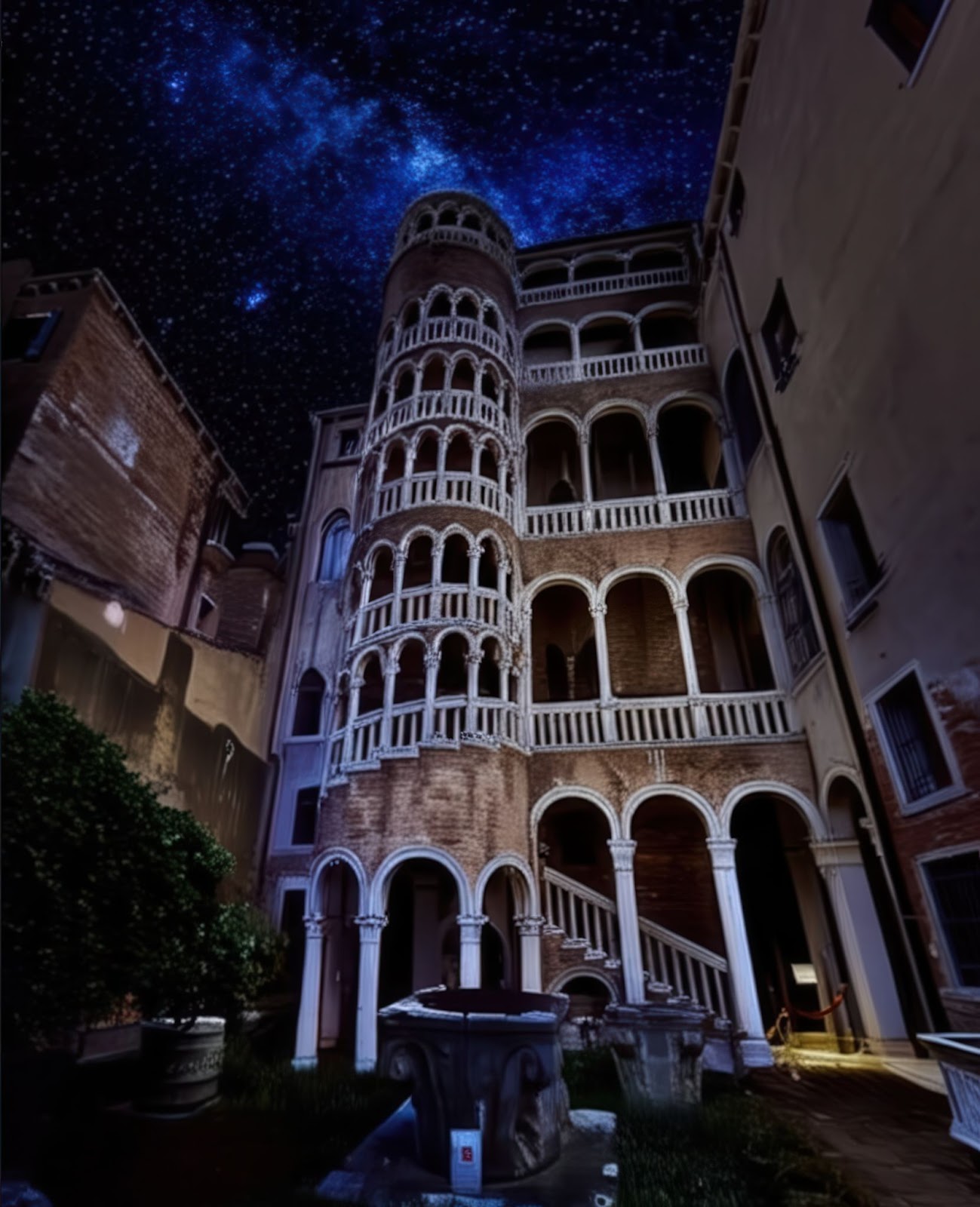
    Scala Contarini Bovolo: stone spiral in the secret heart of Venice.

    Before belonging to the Contarini, the palace was owned by the Morosini family. Over
    the centuries, the building had different uses, including a rental house and a hotel.
    In 1849, the last owner donated it to the “Fraterna dei Poveri di San Luca”, and
    then it became the administrative headquarters of charitable institutions, first the
    Congregation of Charity and later the I.P.A.V.

    The staircase was closed to the public for restoration work that began in August 2015,
    but it is currently open to visitors. The transformation of the palace from a noble
    residence to an inn and then to the seat of welfare institutions reflects the
    evolution of the social and economic context of Venice over time.

    The staircase has eighty monolithic steps that screw counterclockwise. Some sources
    mention 113 steps, a discrepancy that may derive from different counting methods.
    The structure is spread over four floors 4 or six levels. The staircase appears
    light and airy thanks to the presence of arches and reaches a height of almost thirty
    meters. Its construction is configured as a cylindrical tower in red bricks,
    interspersed with arches and balustrades, made with the use of baked bricks and
    Istrian stone. The summit is characterized by a semicircular dome with a belvedere
    that offers a panoramic view of the city. The structure includes a portico on the
    ground floor that opens onto a small internal garden with well heads and presents
    five orders of spiral arches.

    The Tintoretto Room: An Overview of the Art Collection

    On the second floor of the palace, accessible from the loggia of the staircase, is
    the Tintoretto Room. This room displays a collection of Venetian art dating from the
    16th to the 18th century. Among the most significant works are a sketch of the
    “Paradise” by Jacopo Tintoretto, a portrait of Francesco Guardi and a
    sculpture by Jacopo Sansovino. The presence of a sketch by Tintoretto, in
    particular for a grandiose work such as the “Paradise” in the Doge’s Palace,
    underlines the artistic value of the collection and its link with the great Venetian
    masters.

    Today, anyone can climb the Scala del Bovolo, admire its architecture, enjoy the
    panoramic view. An experience once reserved for a select few, now accessible to all.
    A symbol of a Venice that, while preserving its history and traditions, opens itself
    to the world, makes itself available, democratizes itself.

    This transition, this “social ascent,” is an integral part of the Venetian identity.
    A city that, despite having long been dominated by a mercantile oligarchy, has always
    cultivated a strong sense of community, a value for the common good, an attention to
    the public enjoyment of art and beauty.

    Is this democratization of beauty part of Venice’s lasting legacy? How does the Scala
    Bovolo, from private to public, reflect Venetian values?

    The Timeless Ascent in the Contemporary World

    The Scala Bovolo is not just a monument of the past, a historical artifact to be
    admired with detachment. It is a living, pulsating work, which continues to speak to
    the present, to question us about the future. Its themes – ascent, authenticity,
    perspective – resonate strongly in the contemporary world, offering us food for
    thought and inspiration.

    In an era of superficiality, speed, homogenization, the Scala Bovolo reminds us of
    the value of depth, slowness, uniqueness. In a world dominated by pre-packaged
    images, tourist clichés, standardized experiences, it invites us to seek
    authenticity, truth, essence.

    Its spiral, a continuous upward movement, speaks to us of progress, growth,
    evolution. But also of cyclicity, of returning to the origins, of respect for the
    past. A delicate balance, a fruitful tension, which reflects the complexity of our
    time.

    The panoramic view from the Bovolo, the privileged perspective it offers on
    Venice
    , invites us to look at the world from a different point of view, to
    overcome appearances, to grasp the connections, to understand the relationships. A
    fundamental exercise in an era of fragmentation, polarization, loss of meaning.

    The Scala Bovolo, in this sense, is a lighthouse. A solid point of reference, in a
    sea of uncertainties and changes. A symbol of enduring values, which resist time and
    fashions, which continue to illuminate our path.

    Can a staircase from the past really guide us towards the future? Can a silent
    monument still whisper words of wisdom and inspiration to us? The Scala del Bovolo,
    with its timeless spiral, invites us to believe in it.

    The Bovolo spiral is an infinite movement, a continuous ascent, an endless
    path.

    Like the discovery of Venice, a journey that never ends, which is renewed with
    every glance, with every step, with every climb. The greatness of Venice, authentic
    and profound, unfolds slowly, gradually, like the spiral of the Bovolo, revealing new
    perspectives, new emotions, new understandings with each turn.

    The Scala Contarini del Bovolo. An invitation to ascent, not only physical, but also
    inner.

    An authentic, profound, unforgettable Venetian experience. A hidden treasure, which
    is revealed to those who know how to seek, to those who know how to climb, to those
    who know how to look beyond the horizon.

    The address of the Scala Contarini del Bovolo is San Marco 4303, 30124 Venice. It is
    located near Campo Manin. To reach it, I recommend identifying Campo Manin and
    following the small signs on small wall signs.

    If you want to see immediately where the Scala Contarini del Bovolo is, look here:
    https://g.co/kgs/tTSAJgH
  • What happens if it rains in Venice?

    What happens if it rains in Venice?

    Could an apparent meteorological obstacle lead to a better understanding of the new paradigm of the experience economy – where intimacy surpasses spectacle and “limits” become catalysts? This post is for those who stubbornly seek to create
    authentic connections in a world dominated by digital technology and the obsession with external validation.

    Rainy Venice Carnival: reflections of a Hotel Manager on the authentic experience.

    A rainy Carnival in Venice allowed me to grasp a profoundly disruptive vision for the future of experiences and, ultimately, for the way we Hotel Managers often approach connection and celebration in an increasingly chaotic world. I’m not
    interested in telling a fascinating anecdote; I see it as a manifesto for a revolution in experience design and human interaction.

    Yesterday’s rain, in the middle of Carnival, was not a setback. It was the unexpected set designer of a one-act play, a unique opportunity to reveal an even more authentic side of the Hotel… and ourselves.

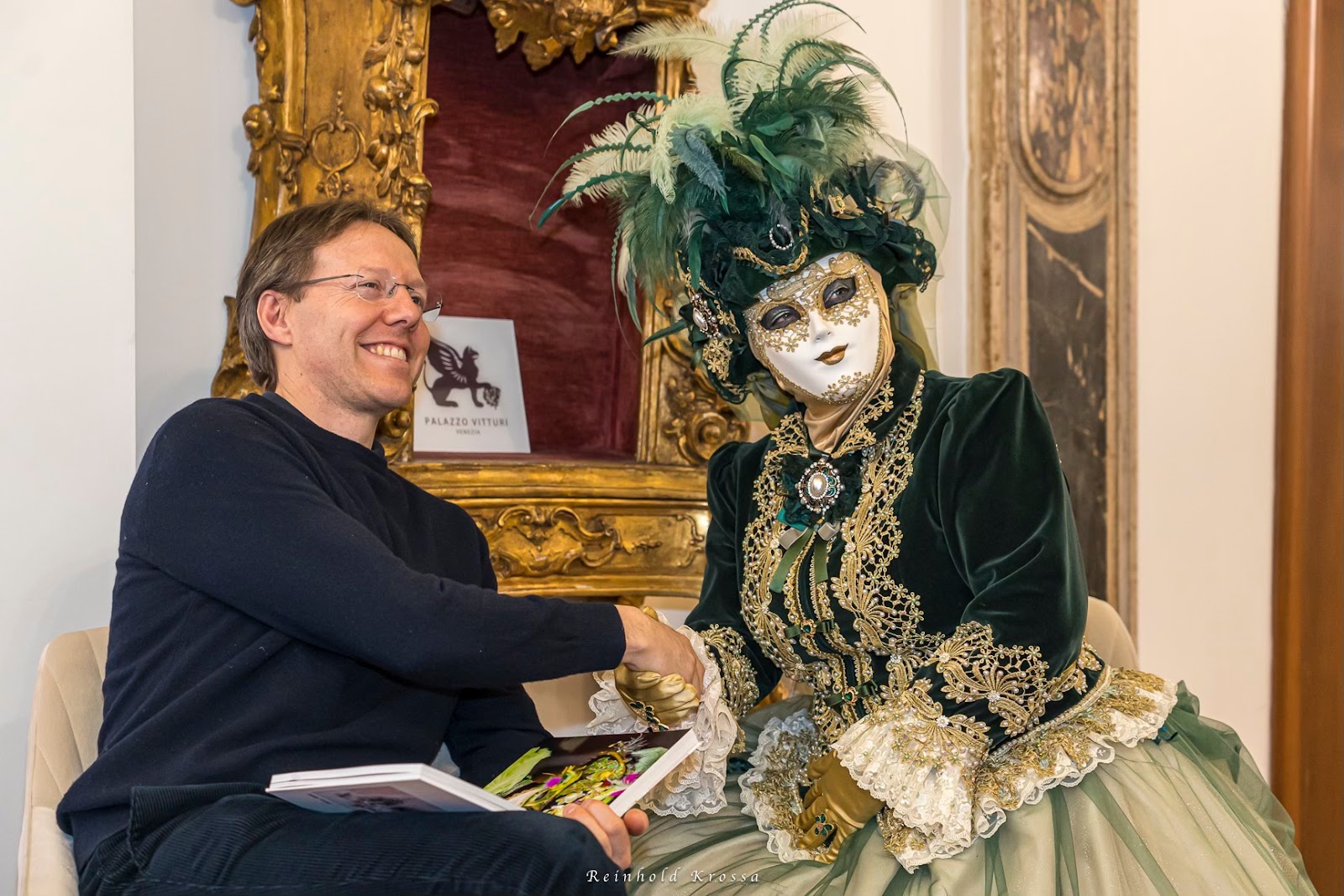
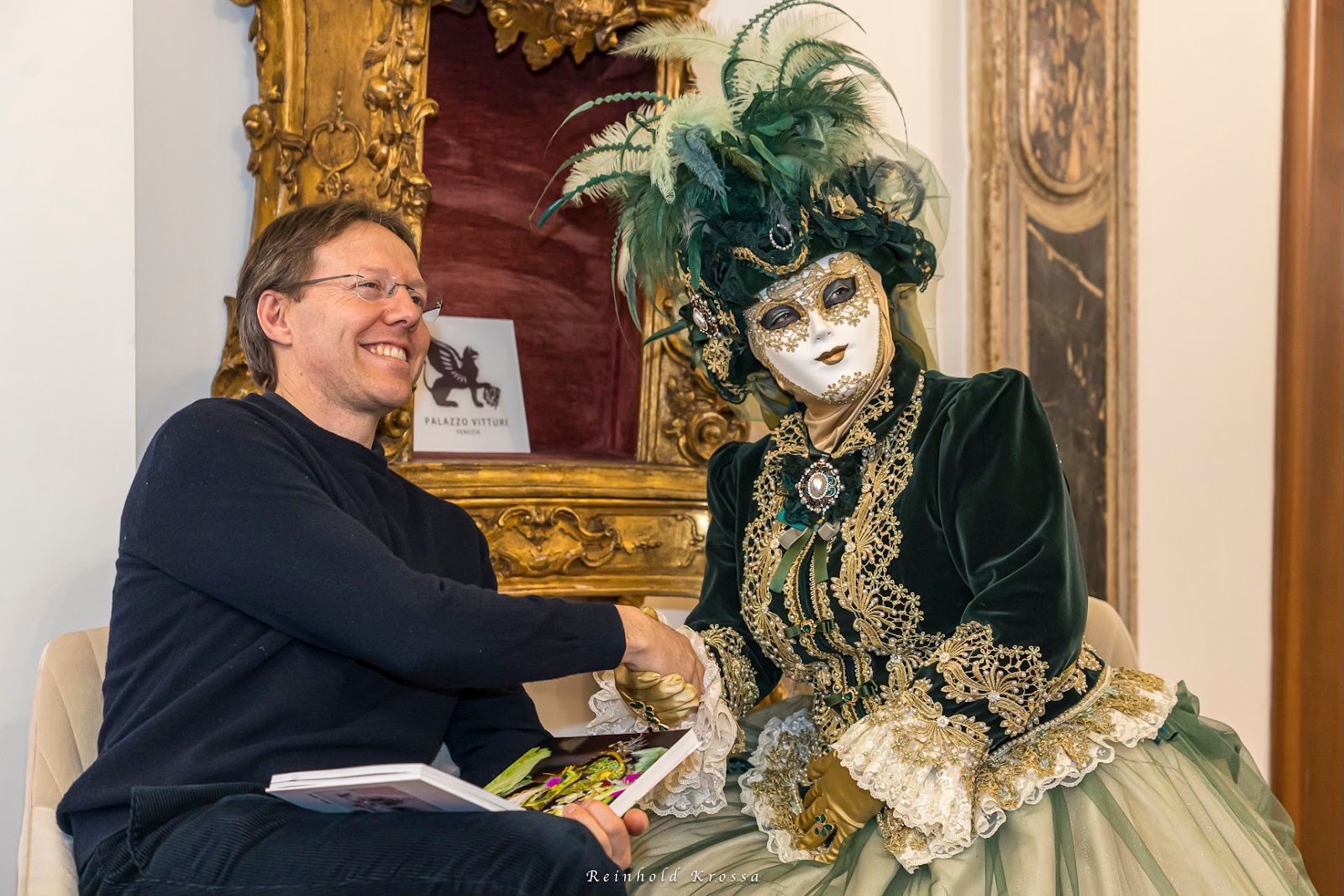
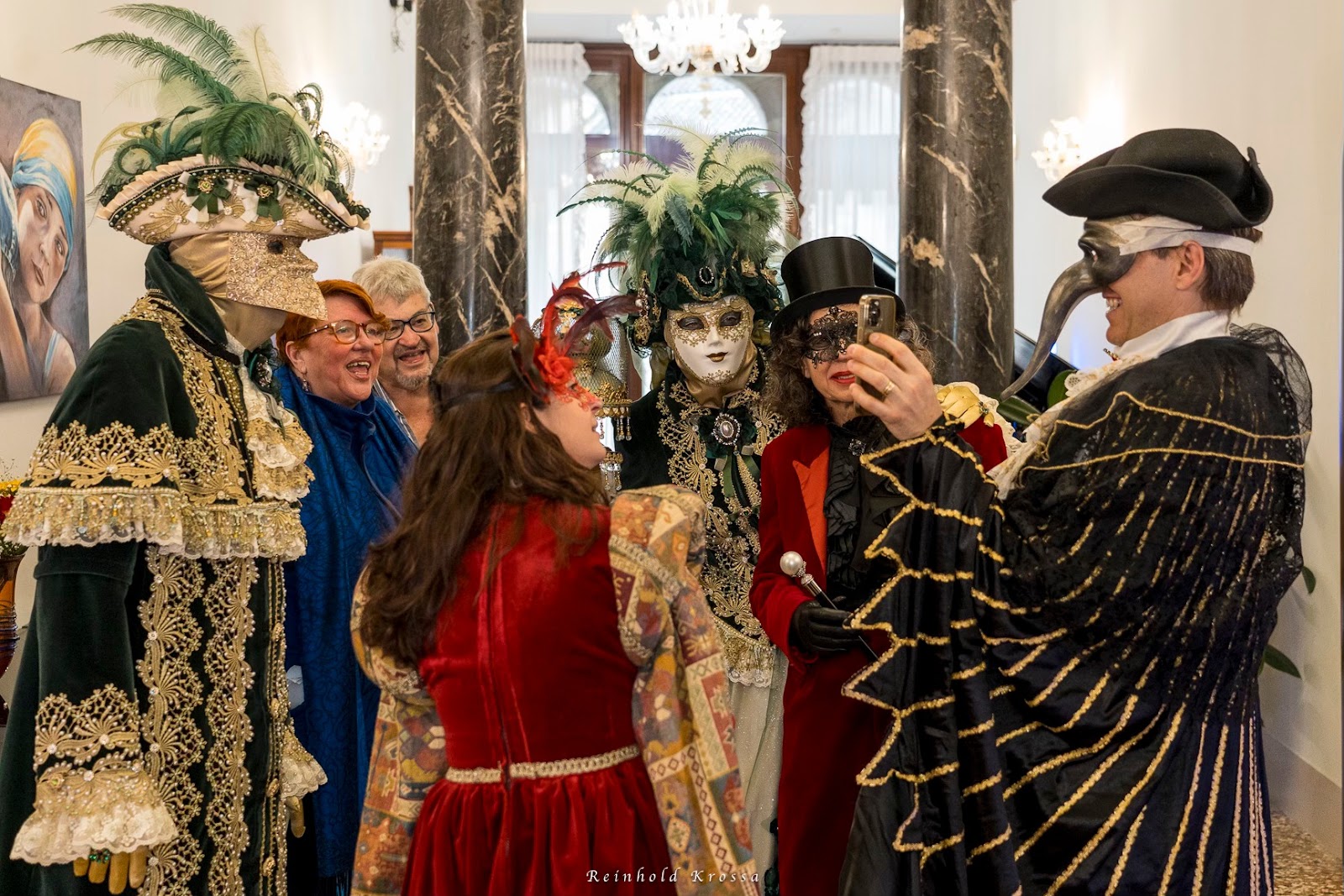
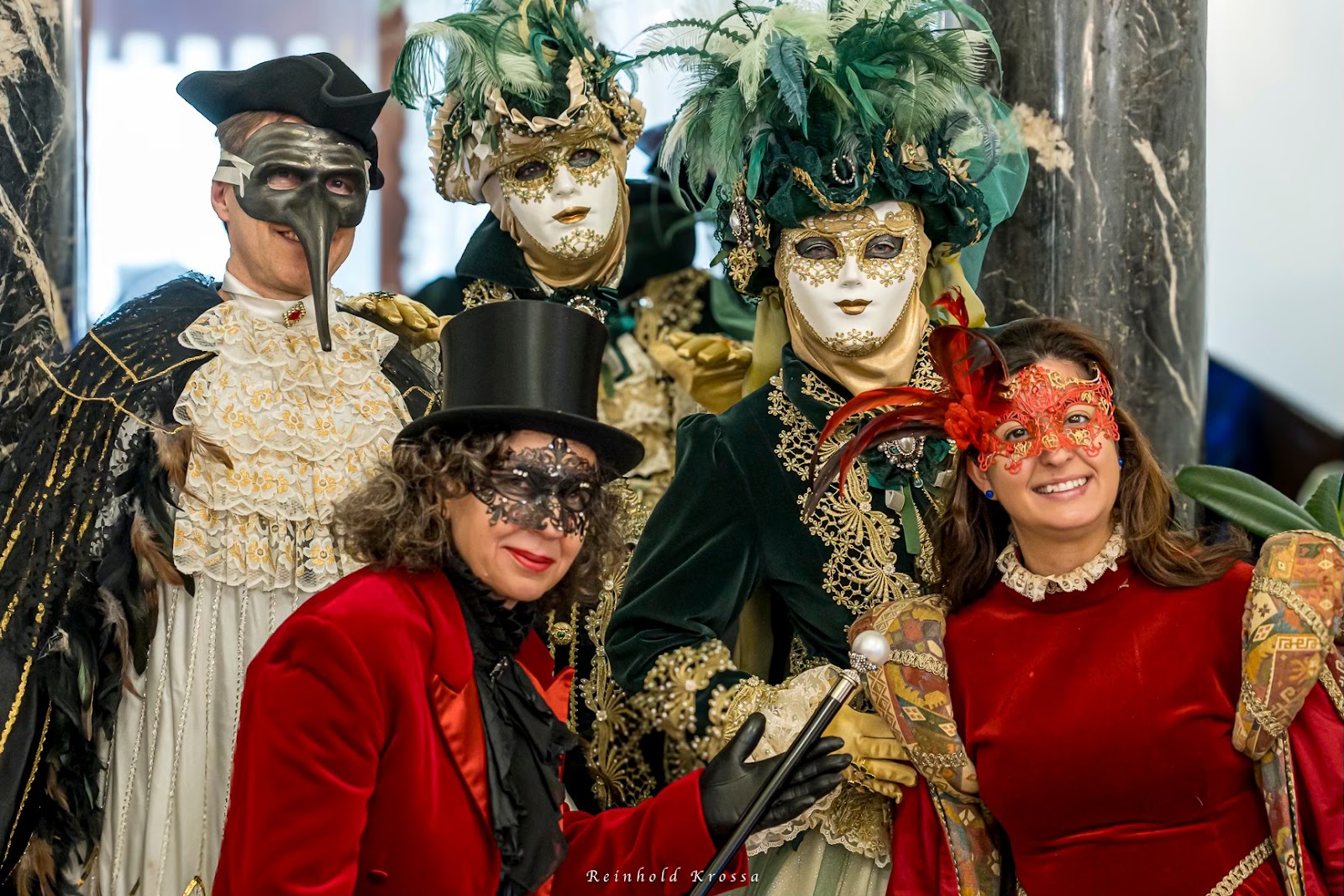
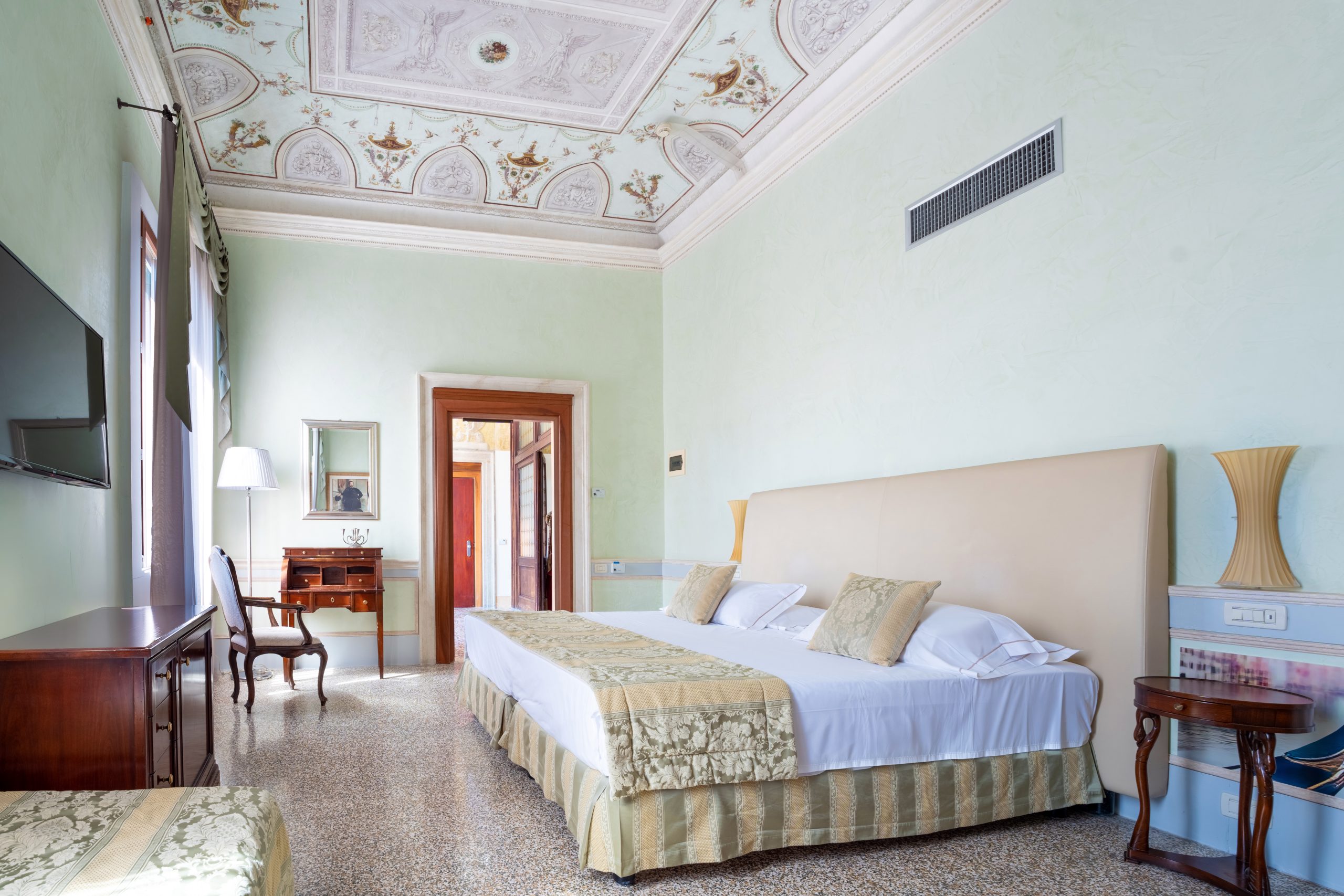
    Rita, Reinhold, Gabriele, Berndt, Petra, Oliver? Familiar faces, smiles we find again. They, who return to Palazzo Vitturi every year, not only as guests, but as friends, as an integral part of our Venetian story.

    Well, on this rainy day, they were here. With their carnival costumes, ready to celebrate the most authentic Venetian tradition. But the rain… an unforeseen event that could have dampened the enthusiasm, turning into disappointment.

    But no.

    Instead, we did something crazy. We called together all the staff. Everyone. And we launched the challenge: “Let’s put on masks too! Let’s celebrate Carnival… here, now, together!”

    Have you ever seen a hotel manager dressed as Casanova who turns into a carrion bird with plumage? Or a receptionist transformed into Colombina? Try to imagine the scene: the elegance (and the routine!) of a Hotel invaded by a wave of
    color, feathers, sequins. The rigid uniforms disappeared, replaced by the playful freedom of costumes.

    Something extraordinary happened.

    Barriers fell. Formalities melted away. Guests and staff, united in a single, contagious carnival spirit. Distances were erased, leaving room for unexpected intimacy, a deep and authentic human connection.

    Rita’s laughter intertwined with that of our staff. Berndt improvised a dance with one of our waitresses. Gabriele shared anecdotes of past Carnivals, while Petra admired the details of the staff’s costumes.

    We were no longer “staff” and “guests.” We were simply people. Souls meeting, recognizing each other, celebrating each other.
    Cin Cin with a nice flute of Prosecco and the Palazzo, at that moment, was no longer a hotel. It was a home. A home where hospitality is not a service, but an embrace. A place where tradition is not a cold ritual, but a living,
    pulsating, shared experience.

    Thanks.

    Because, after all, what is authentic hospitality if not this? The ability to create magical, unexpected, unforgettable moments. Even when it’s raining outside.

    Rainy Venice Carnival: Hotel Manager discovers the value of authentic connections.

    It’s not just about saving a Carnival day; it’s about reclaiming intimacy and authenticity in an age of mass spectacle. For too long, the events industry – and, by extension, much of our social and cultural landscape – has been
    dominated by the pursuit of grandeur, pomp, and external validation.

    Think of the typical Venetian Carnival: a dazzling and overwhelming public spectacle designed for mass consumption, where
    individuals can easily get lost in the crowd and the experience is… well,
    generic.

    The rain, initially perceived as an obstacle, here became the catalyst for a radical change of perspective. Instead of fighting against the elements and clinging to the already planned external spectacle, we embraced the
    limit and turned inward. The “Palazzo” ceases to be just a building; it transforms into a sanctuary for authentic human connection, a curated space where intimacy and shared joy become protagonists.

    Isn’t that a disruptive vision? The future of meaningful experiences lies not in chasing the biggest, the loudest, and the most external, but in cultivating the smallest, the deepest, and the most internal. This “Carnival at the
    Palazzo” is a microcosm of what I call “the Economy of Intimate Experiences.

    Imagine a world where companies, communities, and even individuals intentionally create “Palazzo Moments” – controlled and curated environments designed to foster
    authentic connections, break down barriers, and strengthen bonds. It’s not about exclusivity in the traditional sense, but about
    intentionality and focus.

    Rainy Venice Carnival: masks and umbrellas.

    The disruptive elements of this vision are manifold:

    • Rejection of Mass Spectacle: We move away from the obsession with massive events and generic “tourist trap” experiences. The value shifts from the quantity to the quality of the connection.
    • Embracing “Limits” as Catalysts for Creativity: The rain, the “limit”, forced innovation. In business and in life, perceived obstacles can be just the spark for simple and revolutionary ideas and deeper engagement.
    • Focus on Internal Resources and Community: Instead of relying solely on external attractions and fleeting trends, we prioritize the strength of existing relationships, staff cohesion, and the cultivation of a strong internal
      community. The “staff” and recurring “friends” are the real stars of this Carnival, not just the costumes.
    • The “Palazzo” as a Metaphor for Intentional Space: We learn to create “Palazzos” – metaphorical and sometimes literal – in our lives and in our businesses. These are spaces, physical or digital, designed to nurture meaningful
      interactions and foster a sense of belonging and shared purpose.
    • Resilience and Adaptability as Core Values: Remarkable adaptability and resilience in the face of unforeseen events becomes a crucial skill in a world of constant change and
      disruption.

    It’s not just about turning a rainy day into something better, not at all. It’s about understanding that the deepest and most memorable experiences often arise from intimacy, intentionality, and the courage to deviate from the
    expected path.

    It’s time to bring the party indoors, metaphorically speaking, and rediscover the power of authentic connection in a world that desperately craves authenticity.

  • Venice NOT for Tourists: The Sweet Secret (Mammalucchi)

    Venice NOT for Tourists: The Sweet Secret (Mammalucchi)

    Venice at Carnival. A sparkling stage, an open-air theater where history and fantasy dance hand in hand. Elaborate masks,
    sumptuous costumes, an echo of past eras that resonates through streets and squares.

    But behind the glitz, beyond the festive crowd, beats a secret heart, a more intimate rhythm, a melody whispered among
    Venetians. And this melody has the sweet and unmistakable taste of a hidden treasure: the Mammalucchi.

    Mammalucchi: sweet secret of the Venice Carnival.

    Close your eyes. Feel the crisp cold of the February air that tingles your cheeks.

    Perceive the distant echo of laughter and music crashing against the ancient walls. Savor… no, stop! Not the usual Venetian
    fritters.

    Forget the frìtola.

    Maybe you haven’t been to Venice yet, but you’ve probably heard about it. (Perhaps you’d be interested in discovering the secrets
    of
    Venice Between Myth and Reality?)

    Maybe you’ve already eaten plenty of them!

    But clear your mind of the aroma and taste that you think you know of the Venetian Carnival.

    Because what we are about to reveal is a sensory experience that will make you doubt you have ever truly tasted Venice.

    There is a hidden treasure, a secret alchemy that beats in the heart of the Carnival, ignored by most.

    A sweet that is not offered, but conquered.

    That doesn’t shout its presence, but lets itself be discovered by those who have an ear to the true vibrations of Venice.

    This sweet is called Mammalucco.

    Mammalucco.

    Repeat this word.

    Let it resonate in your mind.

    Doesn’t tell you anything, does it? Perfect.

    Because its power lies precisely in the enigma that surrounds its name and its essence.

    Mammalucco… sounds almost like an affectionate insult, a playful nickname.

    But the truth, as often happens in Venice, is layered, rich in historical echoes and hidden meanings.

    Read on, and the veil of this mystery will lift, revealing a story that has its roots in the beating heart of the Serenissima.

    Imagine an artisan, Sergio Lotto, in his Murano workshop, fragrant with the scent of sweets.

    Intent on shaping an exotic sweet, a mirage of oriental flavors.

    But something goes wrong.

    An error in the doses, an imprecision that in other contexts would have been a failure.

    Instead, in Venice, the error turns into gold.

    From that imperfect dough, Sergio brings out a new shape, rough, irregular cannoli, which fry in the sizzling oil, releasing an
    unexpected, pungent and sweet aroma at the same time. If you are interested in the history of Venice, you can read about
    The Venice Arsenal.

    An “imperfect” sweet, therefore, just like Venice.

    Fragile, unique, born from water and human creativity.

    A sweet that doesn’t need elaborate creams or lavish decorations.

    Its beauty is in the simplicity, in the genuineness of the ingredients, in the history it carries with it.

    While you imagine it golden and crunchy, know that the real surprise is inside: an unexpected softness, almost creamy, even without
    a gram of cream.

    A tactile contrast that destabilizes and seduces.

    To savor the authentic Mammalucco, you must make a greedy pilgrimage.

    A single address, like a cardinal point in the secret map of Venetian taste:

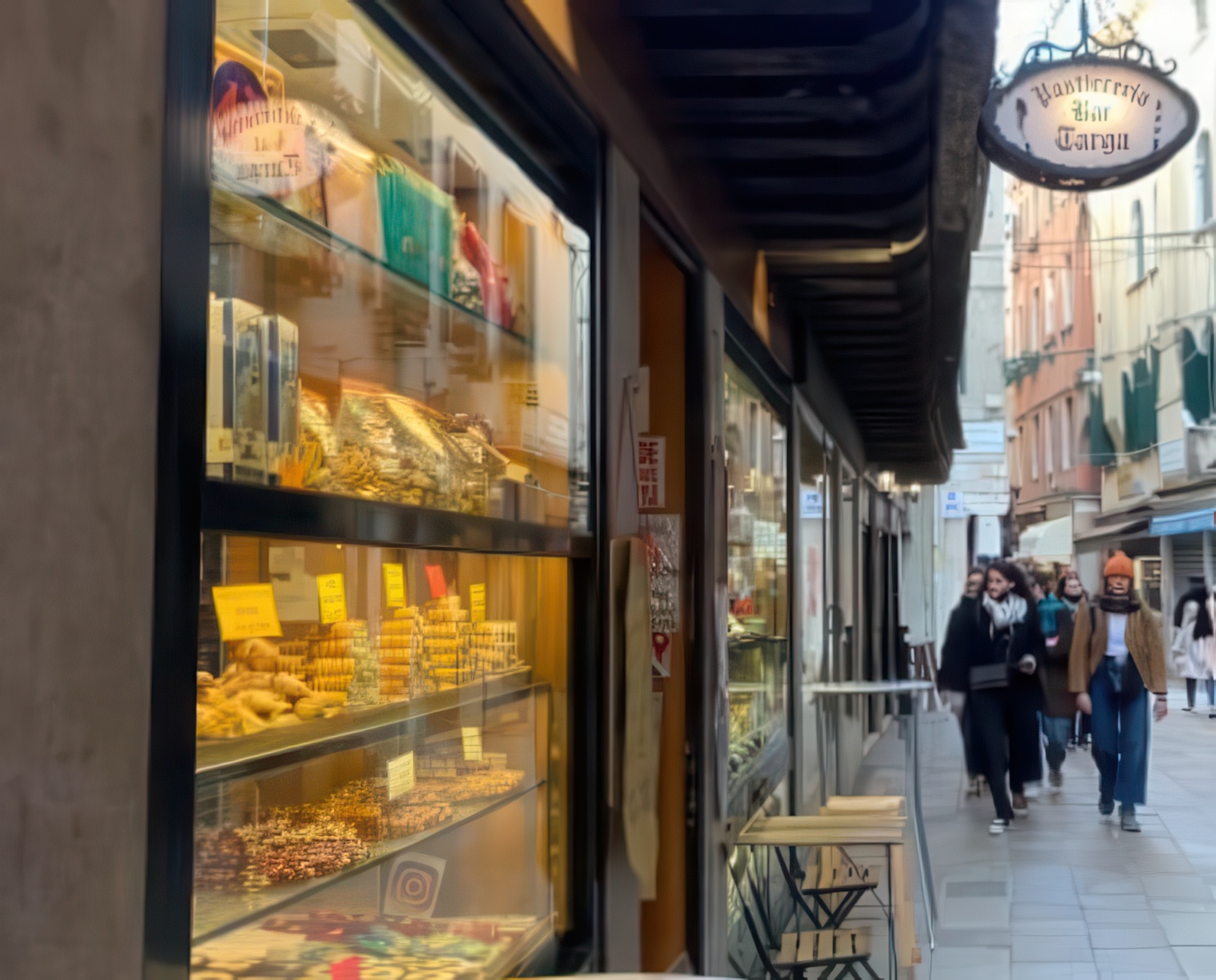
    Pasticceria Targa, Ruga Rialto:

    Mammalucchi: sweet secret of the Venice Carnival.

    ( Google Maps: https://maps.app.goo.gl/RdbZvR1jtWgg5gNX6 )

    Mark this name in your sensory memory.

    Because it is here, and almost exclusively here, that the magic is repeated, year after year, Carnival after Carnival.

    Don’t look for it elsewhere. Don’t trust imitations.

    The authentic Mammalucco is a geolocated experience, anchored to that precise corner of Venice, in that specific pastry shop
    that guards the original recipe like a family treasure.

    And now, the name. Mammalucco. Does it sound strange, almost funny?

    Sergio Lotto himself defines it as “indrìo” (in Venetian “a bit strange”).

    But behind this apparent strangeness lies a distant echo, a whisper that comes directly from the heart of the Middle East.

    Mammalucco derives from the Arabic mamālīk, warrior slaves who conquered power in distant
    lands.

    A term that evokes strength, rebellion, and an unexpected destiny.

    Mammalucco“: from warrior slave to carnival sweet.

    A dizzying semantic leap? Maybe.

    But Venice is a master in transforming, reworking, giving new life to what seems obsolete or out of context.

    Like Sergio’s mistake, the name “Mammalucco” takes on a new, Venetian, ironic, affectionate meaning.

    “Mammalucco” in Venetian becomes synonymous with “fool”, “naive”.

    But is he really foolish who savors this sweet?

    Or perhaps is he foolish who settles for the usual fritters, missing out on the complexity and history contained in every bite of
    Mammalucco?

    The answer, of course, is in the taste.

    Imagine the scene: the illuminated window of Pasticceria Targa, the queue winding outside, the eager anticipation.

    The sweet and spicy smell that mixes with the crisp air of Venice.

    Then, finally, the Mammalucco in your hands. Warm, golden, slightly sticky.

    The first bite: the superficial crunchiness that gives way to the internal softness, the explosion of sultanas and candied orange peel,
    a citrusy touch that dances on the tongue.

    An ancient and new flavor at the same time, an experience that is imprinted in the sensory memory.

    Mammalucchi: sweet secret of the Venice Carnival.

    The recipe? Secret, of course.

    Jealously guarded, handed down from generation to generation.

    Another piece of the Mammalucco mystery. A secret that makes every single taste even more precious.

    An experience that goes beyond the simple sweet, transforming into a ritual, into a gastronomic treasure hunt in the beating heart of
    the Venetian Carnival.

    Yet, despite the secret, despite the aura of mystery, the Mammalucco is there, within reach (if you know where to look).

    A hidden treasure that is just waiting to be discovered, savored, loved.

    A small, great Venetian secret that will make you feel part of a close circle of initiates to the true taste of Carnival.

    Don’t wait to be told about it.

    Live the Mammalucco experience.

    Because the most precious secrets of Venice are not found in tourist guides, but are whispered among the streets, hidden in the
    illuminated windows, revealed to those who have the curiosity, the courage and the greed to look for them.

    The next time you hear about the Venetian Carnival, forget the glossy masks and the tourist clichés.

    Think of the Mammalucco.

    Think of the secret flavor of Venice, of the error transformed into delight, of the millenary history contained in an apparently
    “foolish” sweet.

    And let yourself be guided by instinct, by the desire to discover, to savor, to live Venice in a completely new way.

    Because Venice is not just what you see. It is, above all, what you taste and feel deep inside. And the Mammalucco can
    be one of the secret keys to access this hidden, authentic, unforgettable Venice.

    Happy treasure hunt… and happy Carnival.

    Highlights

    The Mammalucco: More than a Sweet, a Passport to Authentic Venice

    While fritters (*frìtole*, as we call them) are the queens of Carnival, *Mammalucchi* are the hidden princes, a secret whispered
    among the most attentive Venetians.

    The Mammalucco perfectly embodies the Venetian spirit: ironic, surprising, linked to hidden traditions and capable of finding beauty
    even in imperfection.

    In an increasingly standardized tourist world, the Mammalucco reminds us of the value of uniqueness and authenticity.

    Where to Savor the Real Mammalucco: Secret Addresses

    The hunt for the Mammalucco is part of the fun! You won’t find this sweet on every corner of Venice.

    But here are two addresses to absolutely mark:

    • Pasticceria Targa (Ruga Rialto): The original sanctuary of the Mammalucco, where the tradition of Sergio Lotto
      continues to live. Don’t be intimidated by the discreet appearance, a treasure of taste is hidden here. Google Maps:
      https://maps.app.goo.gl/RdbZvR1jtWgg5gNX6
    • Pasticceria Bonifacio (maybe): It is said that this pastry shop, linked to Sergio Lotto’s path, also offers its
      own version of the Mammalucco. It’s worth investigating! Google Maps:
      https://maps.app.goo.gl/6T7mwLRKWvwe71TJ9

    Insider tip:

    Don’t look for bright signs or advertising. Trust your sense of smell and ask discreetly. The search is part of the experience!

    Goodbye in Venice!

    Mammalucchi: sweet secret of the Venice Carnival.

  • The Venice Arsenal: Where History Meets Myth (And Even Spider-Man?)

    The Venice Arsenal: Where History Meets Myth (And Even Spider-Man?)

    Discover the Secrets of the Most Mysterious Place in Venice

    The Stone that Inspired Dante’s Inferno

    Above the water gate, a worn stone bears an inscription that is
    indecipherable to many: “As in the arsenal of the Venetians…” –
    Inferno, Canto XXI. Did you know that Dante also shaped his vision
    of Hell here? In 1321, the exiled poet watched the calafati
    (*) curse the boiling pitch.

    Venice Arsenal: ancient gate, history and legends.

    But the paradox is that this “cauldron of the damned” was actually
    the beating heart of the Venetian maritime empire. How did a
    shipyard become a literary myth?

    Venice Arsenal: ancient gate, historic shipyards.

    The Renaissance Factory of Miracles

    Imagine 16,000 men at work: carpenters carving Slavic oaks,
    blacksmiths forging anchors, rope makers weaving hemp into ropes as
    thick as logs. This was the Arsenal at its peak: ships built in a
    day, in the Corderia (the House of Ropes), a long pavilion of 317
    meters that guarded the secrets of Venetian dominance. And the
    true masterpiece? Prefabricated ships, assembled like Renaissance
    Legos.

    Venice Arsenal: ancient shipyards, history and legends.

    Ghosts of Glory: From Napoleon to Netflix

    In 1797, Napoleon extinguished the Venetian gold. The Bucintoro —
    the golden ship of the Doges — was dismembered to finance the
    French troops. But the Arsenal does not die. Today, its silent
    basins host light shows during the Carnival, while yachts
    show off elegance where galleys once dominated. And yes,
    Spider-Man really passed through the towers in his film also set
    here — even superheroes pay homage to history.

    Secrets in Marble: Lions, Vikings and Runes

    In Campo Arsenale, four marble lions stand guard. The most
    imposing — The Lion of Piraeus — weighs 12 tons and hides a Viking
    secret. Stolen from Athens in 1687, it bears 11th-century runes on
    its paws: “Hákón fecit hoc” (Hakon made me). At night, these lions
    seem to breathe… but that’s another story.

    The Bridge of Damned Souls (And Hollywood Stars)

    The paintings of Canaletto immortalize the movable bridge
    of the Arsenal — a hydraulic prodigy that rose to allow the masts
    to pass. Dante could have called it “The Crossing of the Damned,”
    but the Venetians would have smiled, for them that was… home.
    Today it is immobile, but its stones recall the invasion of
    Napoleon and the acrobatics of Spider-Man.

    Enter the Corderie, now an exhibition space of the Biennale, and imagine:

    • 85 tons of hemp transformed each year into ropes that bound empires
    • Marco, a 14th-century boy with his hands burned by pitch
    • The Morosini Code — a secret recipe to withstand storms

    But the real magic? The industrial scent of wood, salt and ambition that still envelops these walls, at least for those who know… how to listen!

    Venice Arsenal: ancient access gate, history and myth

    Goethe’s Warning (And Petrarch’s Promise)

    Goethe, on a visit in 1786, whispered: “How much longer will
    it last?”. Petrarch had already replied centuries earlier:
    “Venice is the port of mankind”. The fires of the Arsenal have
    gone out, but its spirit lives in the fireworks of the Carnival and in the installations of the Biennale.

    “Venice is not a city. It’s an idea. And ideas… never sink.”

    📢 Ready to Discover the Rest?

    This is only 10% of the story. For the COMPLETE experience — with
    the whispers of Dante, the gold stolen by Napoleon and the seasickness of Henry
    III — immerse yourself in the Emotional Audio Guide of the
    new THANKS app!

    👉 CLICK HERE TO UNVEIL THE SECRETS OF THE ARSENAL

    (You will hear the violins with… new eyes.)


    Tag: #SecretsOfVenice #HiddenHistory #AuthenticVenice #DanteInVenice

    Notes:

    Calafati: Ancient artisans specializing in sealing
    ships.

  • Venice Between Myth and Reality: The Secret of Dante and Marco Polo That Awaits Only You

    Venice Between Myth and Reality: The Secret of Dante and Marco Polo That Awaits Only You

    Venice reveals its Impossible Dialogue: Dante and Marco Polo converse among alleys and legends.

    Venice: Dante and Marco Polo, an unpublished journey.
    Franco Ferrari Delfino, in a book presented at the prestigious Ateneo Veneto in Venice, weaves an impossible encounter between the exiled poet and the explorer of the East. Watercolor illustrations, whispers in Venetian dialect, and historical truths merge into an exclusive ebook. For travelers seeking the hidden soul of the Serenissima.

    Dear dreaming travelers,

    Have you ever wanted to experience Venice beyond the glossy surface of tourist guides?

    This week I reveal an unprecedented interpretation, an imaginary dialogue between two legendary figures that opens the doors to a deeper and more personal understanding of the Serenissima.

    A fiery twilight, Saint Mark’s Square enveloped in the industrious silence of the evening. From the shadows, two figures approach. One, austere, with an aquiline nose that cuts through the air and a gaze that scrutinizes the soul: Dante Alighieri.

    The other, with eyes that have seen distant horizons and an enigmatic smile, Marco Polo.

    What would these two giants, Venetian souls even though they were not born there, say to each other?

    Forget the glossy guides, the beaten paths, the mass selfies in front of St. Mark’s. Today, I’m taking you on a different journey. A journey where the compass is the imagination and the destination a secret dialogue, whispered between the shadows of two giants: Dante Alighieri and Marco Polo.

    Venice: Dante and Marco Polo in an imaginary dialogue

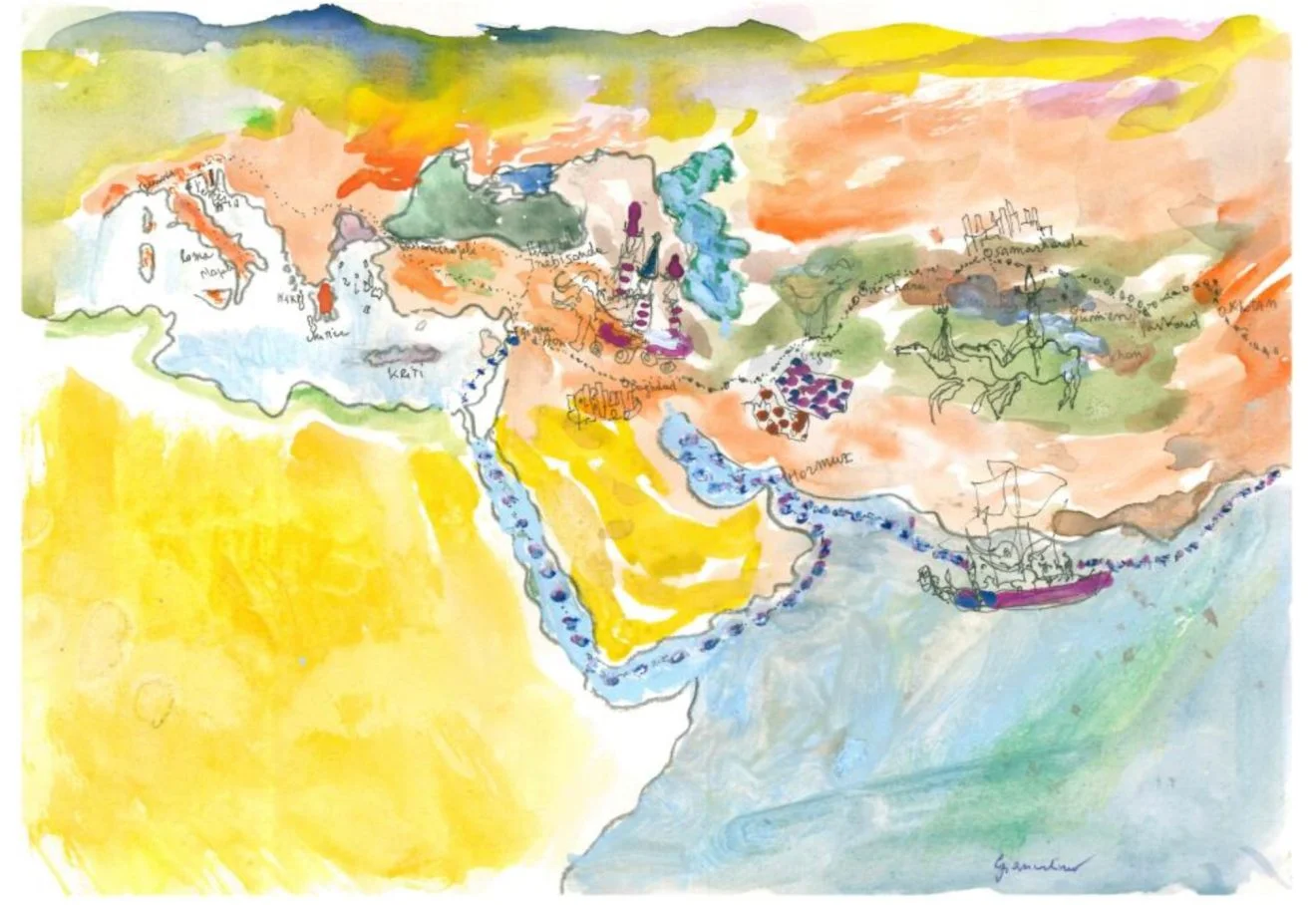
    Marco Polo’s travels in the East, 1270-1295 (© Giancarlino Benedetti Corcos)

    Imagine for a moment. 14th-century Venice. A crossroads of worlds, where the spices of the East perfume the air and Latin mixes with the Venetian vernacular. And in this vibrant scenario, two titanic minds meet.

    Dante, the exiled poet, the architect of Hell. And Marco Polo, the legendary explorer, returning from the wonders of Cathay.

    _A dialogue that never happened? Nonsense!_

    In Venice, certain stories don’t need to happen to be true. They are etched into the soul of the city, a palimpsest of possible encounters, of missed conversations that still vibrate in the salty air.

    And do you know who had the audacity, the genius, to reveal this secret dialogue? A true Venetian like me, one who knows the secrets of his sestieri like the back of his hand. A man who has listened to the murmur of history, capturing the words that the wind has carried away.

    Franco Ferrari Delfino. Write down this name. He is not a beach-read bestseller writer, let’s be clear. He is a carver of souls, one who digs into the depths of time to bring to light sparks of truth. With his “Imaginary Venetian Dialogues”, Ferrari Delfino has done something disruptive: he has given voice to a meeting silenced by history, but pulsating in the collective consciousness.

    Venice: Dante and Marco Polo, an unpublished dialogue.

    Here’s the spark, dear travelers. It’s not just about reading a book. It’s about feeling Venice vibrate beneath your feet as you imagine Dante and Marco Polo discussing stars and the damned, Mongolian emperors and circles of hell. A dialogue where the Venetian dialect mixes with learned Latin, creating a unique linguistic symphony, an echo of the thousand souls that have shaped this city.

    Ferrari Delfino did not limit himself to imagining a formal meeting. He created a vivid, almost cinematic scene. Piazza San Marco, the beating heart of the Serenissima. The Doge grumbling in strict dialect. And then them, Dante and Marco Polo, who scrutinize each other, study each other, challenge each other with words. Imagine the scene! The austere poet, with his aquiline nose and penetrating gaze. And the seasoned explorer, with his skin burned by the Eastern sun and eyes full of wonders.

    A piece of advice from a friend, from a hotelier who has seen the whole world pass through the walls of this ancient Venetian palace? Before booking your flight, before choosing your itinerary, give yourself a gift: immerse yourself in these imaginary dialogues. Let Ferrari Delfino’s words guide you through an unprecedented Venice, a Venice that speaks the secret language of time.

    _Don’t settle for the surface. Venice is an iceberg of stories, and the visible tip is only a fraction of its greatness._

    These dialogues are like underwater dives into its past, allowing you to touch the very stuff of dreams and legends.

    And once here? Close your eyes in St. Mark’s Square. Listen to the hubbub of the crowd, the flight of pigeons, the tolling of the bells. And try to hear, in that din, the distant echo of Dante and Marco Polo’s words.

    Perhaps, in a hidden corner, you will find an audio guide that will whisper their thoughts, their disputes, their insights (I will tell you about this on another occasion). A way to make your trip not just a visit, but a real encounter with history.

    Because, after all, traveling is this: not only moving the body, but above all traveling with the mind. And Venice, more than any other city, lends itself to this fascinating game. A game where the boundary between reality and imagination becomes thin, almost impalpable.

    So, what are you waiting for? Let yourself be fascinated by this impossible, yet incredibly true dialogue. Discover the Venice of connoisseurs, the Venice that whispers secrets to those who know how to listen. And prepare to experience something that will forever change your perception of this unique city. Because, believe me, if Dante had met Marco Polo in Venice… well, the world would never have been the same. And neither will your trip!

    Venice: Dante and Marco Polo, dialogues on an unpublished journey.

    For information and purchase of the book, which is only available in digital version, with magnificent watercolor illustrations, you need to contact the Ateneo Veneto, a historic Venetian institution, of which Ferrari Delfino, the author, is a member.

    (English version translated by Eric Denker) : https://ateneoveneto.org/it/i-libri-dei-soci-dialoghi-immaginari-veneziani/

    Before leaving, then, imagine: Dedicate some time to visualizing the meeting between Dante and Marco Polo in Venice. What would they say to each other? Where would they meet?

    Look for traces: During your visit, look for the places and atmospheres that may have inspired this dialogue. Let your imagination guide you.

    Let suggestions like these influence your way of perceiving the city, discovering unexpected details and connections.

    Share your vision: Talk about this perspective with other travelers. Spread the idea of a trip to Venice that nourishes the mind and soul.

    .. And get ready to experience a journey that goes beyond a simple visit, an immersion in culture and history that will leave an indelible mark on you.

    See you soon from Venice!

    Michele

    Venice: Dante and Marco Polo in a historical dialogue

  • Same old tour? No, this is a journey. THANKS: start here, time stops.

    Same old tour? No, this is a journey. THANKS: start here, time stops.

    “THANKS” Whispers the Doge’s Secrets to You: Listen to the Story of Doge’s Palace

    Doge's Palace: emotional journey with THANKS audio guide.

    THANKS is the audio guide that promises to reveal the secrets of Doge’s Palace. Not a cold list of dates and names, but an intimate, almost personal immersion, in a place where power and beauty have been intertwined for centuries.

    Imagine crossing the Porta della Carta, the buzz of the crowd fading, replaced by a voice that welcomes you, not as a tourist, but as an expected guest. That voice is “THANKS”, your personal guide, your Virgil through the golden labyrinths of the Serenissima.

    Why “THANKS”? The word evokes gratitude, appreciation. Isn’t it an act of gratitude to listen to the stories that the palace stones have to tell? Isn’t it a sign of respect to lend an ear to the whispers of the past?

    This is not your usual audio guide. Forget the monotonous voice that recites dates and names. “THANKS” is a living, pulsating narrative that adapts to your pace, to your gaze. It is a silent dialogue between you and history, an experience that is etched in your memory through deep emotional connections.

    A brief anecdote, an unexpected detail. Then, a broader fresco of words, which paints the atmosphere of an era. The rhythm quickens, slows down, allowing you to breathe in the majesty of the spaces.

    Doge's Palace Venice: THANKS audio guide for an emotional tour.

    Imagine being in the Hall of the Great Council. The imposing dimensions overwhelm you. “THANKS” does not limit itself to describing the works of art, but transports you to the fervor of the assemblies, to the passions that animated the Doges and the Venetian nobles. You hear the echo of their voices, their ambitions, their fears.

    Each section is an invitation to look beyond the surface, to question the past.

    Who built this palace? Why these decorations? What secrets lie behind these monumental doors? “THANKS” does not offer pre-packaged answers, but stimulates your curiosity, pushes you to become a detective of time.

    You have just discovered a fascinating detail, but the narrative is already leading you towards a new marvel. An invisible thread links the different sections, creating a network of connections that is revealed progressively.

    You will then leave behind the magnificence of the Hall of the Great Council, but a hint of the hidden power of the Republic will intrigue you. “THANKS” will gradually reveal the intricate plots of the Venetian government.

    The Doge’s Palace is not just a building, but a “stone ship” anchored in time, an “open book” whose pages are frescoed with the blood and gold of history.

    When you think you have understood one aspect of the palace, “THANKS” surprises you with an unexpected perspective, a detail that overturns your certainties.

    Doge's Palace: THANKS audio guide for an emotional journey through the history of Venice.

    You have admired the magnificence of the Council Halls, but suddenly the narrative shifts towards the unexpectedly cramped dogal chambers. A striking contrast that reveals the complexity of Venetian power, its light and its shadow.

    Apparently insignificant details, mentioned in passing, may return later, taking on a crucial meaning. A common thread that guides you through the labyrinth of history.

    Stories of secret loves, betrayals, revenge. Primordial emotions that resonate in time, making the history of the Doge’s Palace vivid and engaging.

    We are in the heart of history, in the thick of the events that made this place famous.

    The audio guide invites you to look at the palace with new eyes, to understand its deeper meaning.

    What remains today of that power, of that magnificence? What is the legacy of the Doge’s Palace? “THANKS” does not offer definitive answers, but stimulates your critical thinking, invites you to draw your own conclusions.

    Even when the visit is over, the stories you’ve heard will continue to resonate in your mind. A detail, an image, an emotion that reappears unexpectedly.

    The stories you’ve heard are not just information, but fragments of a larger fresco that has been imprinted in your memory. It is the magnificent complexity of Venice.

    “THANKS”. A simple word, but full of meaning. The seal of an immersive experience that goes beyond information and leaves an indelible mark in the heart of the visitor. A narrative echo that continues to resonate, well beyond the walls of the Doge’s Palace.

  • Basilica della Salute: Venetian Ingenuity, Unwavering Faith. An Architectural Miracle that Defies the Lagoon.

    Basilica della Salute: Venetian Ingenuity, Unwavering Faith. An Architectural Miracle that Defies the Lagoon.

    A million poles, a colossal dome. How Venice defied the plague with beauty.

    Basilica Salute Venezia: cupola e ingegno veneziano contro peste.

    Venice, 1630. The plague rages. But from the heart of despair, a vow is born, a promise: the Basilica della Salute. Not just a simple church, but a challenge to the impossible, a hymn to Venetian ingenuity.

    THANKS guides you behind the scenes of this masterpiece. Not just art and faith, but a titanic engineering feat. Imagine one million two hundred thousand poles driven into the lagoon mud, a submerged forest that supports a dream. The octagonal shape, the double dome, a perfect balance between aesthetics and technique. Longhena, a visionary architect who dares to challenge the laws of gravity and the lagoon itself.

    Basilica Salute Venezia: cupola e architettura veneziana.

    Observe the Basilica up close. Don’t just admire the Baroque facade, but understand the constructive genius. The staircase that emerges from the water, an optical illusion that defies logic. The dome, light and imposing, a masterpiece of balance. Enter and let yourself be enveloped by the solemnity, but also look for the traces of human ingenuity, the Venetian response to the challenge of the plague.

    Basilica Salute Venezia, architettura, cupola, ingegneria veneziana.

    November 21st. The votive bridge. Not just a religious festival, but the celebration of a victory, the demonstration that Venice knows how to rise from its ashes. Imagine the procession, the crowd, the sense of collective gratitude. The Basilica della Salute is not just a place of worship, but a monument to ingenuity, tenacity, to Venice’s ability to transform tragedy into beauty. Come and discover the architectural miracle that has defied the lagoon for centuries. Come and celebrate the strength of Venice.

    You can listen to the audio guide on the Basilica della Salute, along with dozens of other immersive guides, in the THANKS app.